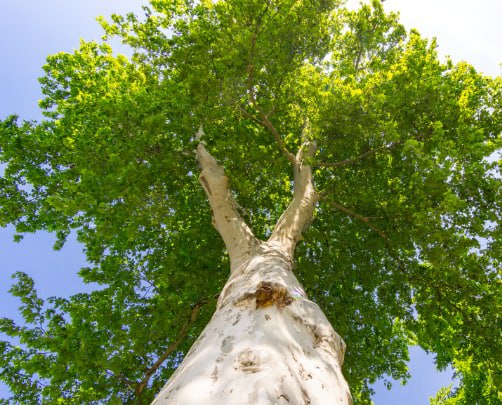
Trees rarely develop into perfectly symmetrical shapes. Their growth is influenced by available light, surrounding vegetation, nearby buildings, previous pruning, exposure to weather and the natural characteristics of the species. As a result, one side of a tree may become noticeably denser, longer or heavier than another.
Some uneven growth is completely natural and does not necessarily require intervention. However, where an unbalanced crown is affecting the tree’s shape, causing branches to extend excessively in one direction or creating poorly distributed growth, professional pruning may help.
For property owners in Dover, Kent, the important point is that corrective pruning should respond to how the individual tree has developed. The objective is not to force perfect symmetry, but to manage selected growth while retaining a natural, healthy crown.
How Can Professional Pruning Improve Uneven Tree Growth?
Pruning can influence how a tree develops by selectively removing or shortening particular branches. When carried out correctly, this can improve crown balance, reduce excessive growth in specific areas and encourage a more suitable structure over time.
The process needs careful judgement. Removing too much growth from the stronger side simply to make the tree appear even can create further imbalance rather than correcting it.
Professional tree pruning therefore starts with understanding why the uneven growth has occurred and determining whether intervention will genuinely benefit the tree.
Why Do Trees Develop Unevenly?
There are many reasons why one section of a tree may grow more strongly than another.
Light availability is a common influence. Where one side receives significantly more sunlight, branches may develop more vigorously in that direction. Trees growing close to buildings, other trees or dense vegetation may also extend their crowns towards available open space.
Other possible influences include:
- previous pruning that altered the original crown
- competition with neighbouring vegetation
- natural differences in branch development
- loss or damage to particular limbs
- exposure to prevailing weather
- restricted growing space
- the tree’s natural growth habit
Understanding the reason matters because not every uneven crown should be treated in the same way.
Uneven Does Not Always Mean Unhealthy
A tree can have an irregular appearance while remaining healthy and structurally suitable.
Trees naturally adapt to their surroundings, so an asymmetric crown can simply reflect the environment in which the tree has grown. Trying to create perfect symmetry may require unnecessary removal of healthy branches.
Before pruning, it is therefore important to distinguish between natural asymmetry and growth that would genuinely benefit from management.
The aim should be to improve the tree where necessary without removing branches simply for the sake of creating an artificially uniform appearance.
Selective Pruning Can Reduce Overextended Growth
One common form of uneven growth occurs when branches on one side of the crown extend considerably further than those elsewhere.
Rather than heavily cutting back the entire side, selected branches can often be shortened to suitable growth points. This can reduce excessive extension while maintaining a natural crown outline.
Selective pruning is particularly useful because it allows attention to be concentrated where it is actually needed.
The result should still look like the same tree, only with growth managed more appropriately.
Crown Reduction May Help With Wider Imbalance
Where uneven development affects a larger part of the crown, carefully planned crown reduction may sometimes be appropriate.
Crown reduction involves shortening selected branches throughout relevant sections of the canopy. The objective is to reduce overall dimensions or particular areas while retaining the tree’s natural form.
It should not be confused with simply cutting every branch back to the same distance.
Each pruning cut needs to respond to branch structure and suitable growth points. This creates a more natural result and avoids leaving an unnecessarily harsh outline.
Pruning Can Help Redistribute Visual Weight
Sometimes a tree looks unbalanced because one section of the crown has become particularly dense.
Selective branch removal may help improve the distribution of foliage and reduce the visual dominance of one area. However, thinning needs to be carefully controlled.
Removing excessive internal growth can leave the crown sparse and may unnecessarily reduce healthy foliage.
Professional pruning considers the entire canopy before individual branches are selected. This helps ensure that changes made to one section do not create a new imbalance elsewhere.
Previous Pruning Can Contribute to Uneven Growth
The way a tree has been pruned previously can have a significant influence on its current shape.
If one side has been cut back more heavily than another, subsequent growth may respond differently across the crown. Poorly positioned cuts can also result in vigorous new shoots developing around particular areas.
Correcting this type of growth may require a gradual approach.
Rather than attempting to reverse years of development during one pruning session, selected branches can be managed while allowing the tree to retain sufficient healthy growth. Future pruning can then continue improving the structure where necessary.
Corrective Pruning Is Often a Gradual Process
Not every uneven tree should be corrected during a single visit.
Where substantial differences have developed between sections of the crown, removing enough growth to create an immediate visual balance could mean taking away more foliage than is appropriate.
A staged approach can often produce a better outcome.
By making carefully selected reductions and then allowing the tree to respond, future pruning can be based on how new growth develops. This is particularly useful when managing established trees that have been growing unevenly for many years.
Young Trees Can Benefit From Early Structural Pruning
Uneven growth can sometimes be easier to manage while a tree is still developing.
Young trees may produce competing branches, poorly positioned growth or a crown that begins developing strongly in one direction. Carefully selected pruning at this stage can help establish a better framework for future growth.
This does not mean repeatedly shaping a young tree into a rigid form.
Instead, structural pruning focuses on managing potentially problematic growth while retaining the branches needed to create a healthy, naturally developing crown.
Mature Trees Require a More Considered Approach
Pruning a mature tree requires different considerations from managing a young specimen.
Large established branches represent a significant part of the crown. Removing them solely to improve symmetry may create unnecessary wounds and substantially alter the tree’s appearance.
Where mature trees have uneven growth, it is often preferable to work with the existing structure rather than trying to redesign it completely.
Selective reduction can manage excessive extension while preserving the character and established form of the tree.
Why Excessive Pruning Can Make Imbalance Worse
Removing too much foliage is not an effective shortcut to creating a balanced tree.
Heavy pruning can dramatically alter the relationship between different sections of the crown. It may also encourage vigorous new shoots, potentially producing dense regrowth in precisely the area that was intended to be controlled.
This is why pruning intensity matters.
The goal is to make proportionate changes that improve the crown while retaining enough healthy foliage for the tree to continue functioning normally.
The Whole Crown Should Be Assessed Before Work Begins
Corrective pruning should never focus exclusively on the branch that appears longest from ground level.
A tree is three-dimensional, and branch distribution can look very different when assessed from various positions. A limb that appears excessive from one viewpoint may form an important part of the crown structure when the entire tree is considered.
At Dover Tree Surgery, we assess the overall crown before determining where pruning may be beneficial. This allows individual cuts to form part of a considered approach rather than treating each visible irregularity separately.
Pruning Should Consider Future Growth
Effective pruning is not only about how the tree looks immediately after work has been completed.
Branches will continue developing, and the tree will respond to the pruning cuts that have been made. This future response should be considered when deciding which branches to retain, shorten or remove.
A well-planned pruning approach aims to leave a crown that can continue developing naturally rather than requiring increasingly severe intervention.
For trees in Dover, Kent, this can be particularly valuable where long-term management is required to maintain an appropriate crown size or shape.
When Should Uneven Tree Growth Be Professionally Assessed?
Professional assessment can be worthwhile when the change in shape is significant, when branches have become particularly extended in one direction or when previous pruning has resulted in awkward regrowth.
It can also be useful where homeowners are uncertain whether an irregular crown actually requires pruning.
Sometimes the most appropriate recommendation may involve relatively minor work. In other cases, a carefully planned crown reduction or staged pruning programme may provide a better long-term result.
The important point is to base the work on the condition and structure of the individual tree rather than simply trying to make both sides look identical.
Conclusion
Pruning can help correct uneven tree growth, but successful corrective pruning is about balance rather than perfect symmetry. Trees naturally respond to their surroundings, and some irregularity is both normal and appropriate.
Where growth has become excessively extended, dense or poorly distributed, selective pruning can help create a more balanced crown while preserving the tree’s natural character. In more established cases, gradual management may be preferable to removing large amounts of growth at once.
If you have a tree with uneven or unbalanced growth at your property in Dover, Kent, contact Dover Tree Surgery. We can assess the crown, identify whether pruning would be beneficial and recommend an appropriate approach based on the tree’s existing structure and future development.
Call us on: 01304 796896
Click here to find out more about Dover Tree Surgery
Click here to complete our contact form and see how we can help with your tree needs.